

Mortgage Forgiveness Debt Relief Act extended to 2014

Mortgage Forgiveness Debt Relief Act extended to 2014 Is the Mortgage Forgiveness Debt Relief Act extended? People have been very worried with the expiration of the relief enacted in 2007 entitled “The Mortgage Forgiveness Debt Relief Act of 2007.” In fact, there are some thinking they may be looking to cancel short sales in progress and having to ask (or beg) their banks to reinstate their loans, help them keep their homes, or seek other remedies in order to avoid a foreclosure or short sale in this new year.

If one can not afford their mortgage debt, how can they afford a big tax bill in the form of “cancelled debt” or call the forgiveness of debt, income? Income? Ugh, the final insult for many facing foreclosure, short sale or loan modification in California. Some have called this short sale tax relief, or foreclosure tax relief. Families and individuals could be relieved of the obligation of taxation of this forgiven debt, called income , for their principal residence and up to 2 million dollars.

The mortgage forgiveness debt relief act has been a very important factor in a decision to short sale, foreclose or look into a bankruptcy. Read the IRS rules of The Mortgage Forgiveness Debt Relief Act and Debt Cancellation here. But YES! It appears to be extended through to January 1, 2014. It looks like it IS part of the fiscal cliff bill that was passed through the Senate and House today/tonight and is ready for the President’s signature.

You can read the PDF version of the “package” and see the following language: SEC. 202. EXTENSION OF EXCLUSION FROM GROSS INCOME OF DISCHARGE OF QUALIFIED PRINCIPAL RESIDENCE INDEBTEDNESS. (a) IN GENERAL.—Subparagraph (E) of section 108(a)(1) is amended by striking ‘‘January 1, 2013’’ and inserting ‘‘January 1, 2014’’. (b) EFFECTIVE DATE.—The amendment made by this section shall apply to indebtedness discharged after December 31, 2012 Has California extended it’s Mortgage Forgiveness Debt Relief for 2013?

Not yet. Keep in mind the news tonight as it relates to this “fiscal cliff package” is for federal IRS tax purposes and does not apply to individual states , and at this time we do not know if California will extend their similar debt relief act, though they did extend the California provisions once before in 2010. See California’s Mortgage Forgiveness Debt Relief information here .

So stay tuned for that, I’ll keep you updated the best I can here as soon as there is any update on the state provisions of this act. If you are thinking of selling your home, need to do a short sale, or want information about options to avoid foreclosure for your Contra Costa home, call me! I serve the areas of Concord, Clayton, Walnut Creek, Pleasant Hill, Martinez, Antioch, Brentwood, Pittsburg, Bay Point, Lafayette, Orinda, Moraga, Danville, San Ramon and many other areas of Contra Costa and some parts of Alameda county.

I’m well versed in short sales and can offer you referrals to qualified attorneys, CPAs and tax professionals to answer your questions. Catherine Myers, Broker Associate Prudential California Realty Offices in Pleasant Hill, Walnut Creek and San Ramon DRE #01337828 Contact me online 925-683-2125 Keep in mind, that the information provided above is not designed to substitute for professional advice from a competent, experienced tax professional.

The information may be incorrect or your situation may be such that it does not apply to you. Be careful about relying on any internet source for information without also checking in with a professional that knows YOUR individual situation.
Mortgage Debt Relief Act Extended in California

? Mortgage Debt Relief Act Extended in California? Mortgage Debt Relief Act Extended in California First, ALWAYS check with your own tax professional as there is still much confusion on the short sale debt relief at both the federal and state level. This blog or others, can NOT be a substitute for qualified advice from your CPA or tax attorney. One of the most commonly asked questions of me on my blog and website is whether or not the Mortgage Debt Relief Act has been extended, and if California has followed suit.

You may all recall, that in 2007 the Mortgage Debt Relief Act came into existence and was meant to offer relief to homeowners in distress, doing a short sale, selling their home for less than their mortgage balance(s). Prior to the act, it was said that the difference between what you sold the home for (what the bank settled for in a short sale) and what WAS owed on your loan was phantom debt, cancelled debt and subject to INCOME TAX!

Income tax on money you never got, never benefited from. You got a 1099 form from the bank you had to address with the IRS in the January following your sale. Bam! Not very nice. Well, the Mortgage Debt Relief Act was meant to relieve homeowners by clarifying that cancellation of debt income on a primary residence may not be applicable. Good news. And shortly after, California Franchise Tax Board followed suit.

The federal debt relief act was set to expire in 2012, but it was extended to December 31, 2013. BUT California DID NOT follow suit in 2013 so it’s been very stressful for California homeowners who conducted a short sale in 2013. We just got some good news. I want to say first, don’t take any blog or real estate professionals word for it . YOU MUST speak to your CPA, tax professional or attorney about your particular situation.

Every situation is different, and real estate professionals are usually not also a CPA or attorney and advice about your taxes must be obtained from a qualified tax professional. But here is the good news for 2014, these recaps are excerpted directly from our California Association of Realtors Alerts ( link ): __________________________________________________________ FEDERAL DEBT RELIEF INCOME TAX FOR SHORT SALES A short sale in California is generally not subject to federal income tax for mortgage debt forgiveness, according to a recent letter from the Internal Revenue Service (IRS) .

C.A.R. worked closely with Senator Barbara Boxer to obtain this IRS guidance. We are also hopeful that we can promptly obtain similar guidance regarding state income tax for mortgage debt relief income from the California Franchise Tax Board (FTB), which has been awaiting this IRS letter. Given that a homeowner in California generally cannot be held personally liable for a short sale deficiency (see below), the IRS stated in its letter that it would consider the mortgage loan as a nonrecourse obligation that is not subject to federal debt relief income tax.

The amount of indebtedness, however, must be reported as the amount realized for capital gains purposes. Of course, a principal residence is generally excluded from capital gains tax up to $250,000 for single taxpayers and $500,000 for married couples filing joint returns (under 26 U.S.C. § 121). State – Franchise Tax Board California homeowners who lost their home in a short sale will not be subject to federal or state income tax liability on debt forgiveness “phantom income” they never received, thanks to recent clarifications by the Internal Revenue Service (IRS) and California Franchise Tax Board (FTB).

In November, in a letter to California Sen. Barbara Boxer , the Internal Revenue Service (IRS) recognized that the debt written off in a short sale does not constitute recourse debt under California law, and thus does not create so-called “cancellation of debt” income to the underwater home seller for federal income tax purposes. Following the IRS’s clarification, C.A.R. sought a similar ruling by the California FTB, with the help of the Board of Equalization (BOE).

Now with the FTB’s clarification, underwater home sellers also are assured that they are not subject to state income tax liability, rescuing tens of thousands of distressed home sellers from California tax liability for debt written off by lenders in short sales. We thank Sen. Boxer and BOE member George Runner for their leadership in obtaining this guidance from the IRS and FTB.

Distressed California homeowners can now avoid foreclosure or bankruptcy and can opt for a short sale instead, without incurring federal and state tax liability, even after the Mortgage Forgiveness Debt Relief Act of 2007 expires at the end of this year. Important Note: From CAR: The IRS guidance is limited to California short sales only. The IRS guidance did not specifically address other types of real estate transactions such as non-judicial foreclosures and mortgage loan modifications.

Contact Catherine Myers, Real Estate Broker for help with a short sale in Contra Costa and the San Francisco Bay Area. Short sales are still happening as some of our areas took huge value plunges and in some areas, they may not recover to the levels needed to sell the home without being a short sale. Catherine can guide you through a short sale, get you the help you need, and get you moved on to the next chapter.

Whether your situation is financial, unemployment, relocation or personal, most banks are well equipped to handle a short sale and can take anywhere from 4-12 weeks to complete. Call today 925-683-2125.

Proposition 60 in Contra Costa – transfer your tax base

Proposition 60 in Contra Costa – transfer your tax base Proposition 60 in Contra Costa – transfer your tax base Proposition 60 in Contra Costa Important information for seniors thinking of a move. I can’t tell you how many times I’ve been called from those over 55 hoping to transfer their tax base from another county to Contra Costa . Alas, in the early 1990’s, Contra Costa repealed Proposition 90 and it has been dead since (and see below, it almost saw a 2nd life, but was shot down again.) Prop 90 is still alive in 8 California counties.

El Dorado, Alameda, Los Angeles, Orange, San Diego, Santa Clara, San Mateo, Ventura). Proposition 90 is known as a “local-option” law. California Counties each have the choice as to whether they participate or not. If a county has instituted Proposition 90, it means it will accept property tax transfers from another California county. Even if the county that the over 55 homeowner is moving from does not have a Proposition 90 rule, it’s ok, the homeowner is still eligible within the Prop 90 county they are moving to .

Many seniors are reluctant to move at all because though they may owe nothing, or next to nothing, on their longtime family home mortgages. Buying a new home may make their property taxes double, or even triple if they buy a new home today. With the run up in our property values across California, that may mean even if they buy a home of lesser market value. Learn more about Prop 60 in Contra Costa (for transferring your tax base with our county) and see below for which counties around the state participate in Prop 90 (which will allow you to move to a participating county and transfer your tax base) ________________________ As as aside, Proposition 60 in Contra Costa is a state law and exists in Contra Costa to do this same thing, but for those already in Contra Costa moving within Contra Costa.

Here’s an example: You buy a home in the 80’s for 300,000. Your property tax base at that time is an approximate 4000.00 per year. Now, that same house is worth 1,000,000 dollars. Your taxes are still in the 4000.00+ per year mark (this is an estimate as per Prop 13 it will increase a modest amount each year). If you sell your house for a million dollars, you can buy something for equal or lessor value and KEEP your 4000.00+ annual taxes!

How cool is that for those over 55? (Certainly, unless you buy a very small condo, it is near impossible to find a home in Contra Costa that would be selling for 300,000. ) Be sure to carefully read the process at the tax assessor website and call them if necessary as you don’t want to make a mistake on this and lose this important benefit. Of course the argument I hear is from younger buyers wondering why they are “penalized” for buying a home today, as their taxes are based on the current purchase price (not the old tax basis of their last home).

Under 55 buyers buy that same 800,000 home as above , they get the 9,000+ a year taxes. Contra Costa does this as an incentive for those retiring, and those scaling down after raising their families in the big homes, to stay in (or come to) Contra Costa. Though the county stands to lose property tax dollars, the county stands to gain significant sales tax revenue. _______________________ Here’s some information from the archives!

Prop 90 was “almost” reinstated in Contra Costa – but it was rejected, below is a blog post I published then. ** THIS WAS REJECTED in Contra Costa County ** (From 2007) So the big news now is that Gus Kramer, Contra Costa County’s Assessor, is thinking of reviving this Proposition in order to rejuventate our flailing real estate market. Home sales are said to be the worst in over 12 years.

Mr. Kramer wants to bring back Proposition 90 for an initial two years to (hopefully) bolster the Contra Costa real estate market by enticing an influx of over 55 (senior) home buyers. From the Contra Costa Times: “There are no guarantees that reinstating Prop. 90 will make a big difference, but it could. Kramer envisions a two-year sunset for Prop. 90, which is when forecasters expect the real estate market to regain its health.

If any problems occur in the meantime, supervisors could cancel the policy on short notice. With few downside threats and the potential for considerable benefits for county residents, we encourage Contra Costa supervisors to reinstate Prop. 90 homeowner assessment transfers from out of the county. It’s an experiment that deserves a try.” For more complete information about whether YOUR county accepts Prop 60 or 90, or if the county you are contemplating a move to is a Prop 90 county, PLEASE CALL THE LOCAL TAX ASSESSOR’s office in that county.

The information below is subject to change as more counties adjust to our changing market: TABLE I Counties which have adopted a Proposition 90 ordinance: Alameda San Mateo San Diego Orange Ventura Los Angeles Santa Clara El Dorado TABLE II Counties which have rejected implementing Proposition 90: Butte Merced San Bernardino Calaveras Modoc* Santa Barbara Contra Costa* Mono Santa Cruz El Dorado Monterey* Shasta Fresno Napa Siskiyou Inyo* Nevada Solano Kern* Placer Sonoma Lake Riverside* Stanislaus Madera Sacramento Trinity Marin* San Benito Tulare Mendocino San Luis Obispo Yolo Information courtesy of the California Association of REALTORS® 2005 Counties with an asterisk * previously had a Proposition 90 ordinance then repealed it.

All other counties listed in Table II never had a Proposition 90 ordinance.

Contra Costa may get continued short sale tax relief

Contra Costa short sale tax relief may be continued Contra Costa short sale tax relief may be continued Contra Costa short sale tax relief extended? As many know, if you conducted a short sale, or lost your home in foreclosure you will receive a 1099 from your banking institutions reporting to the IRS and state tax agencies the amount of debt they cancelled on your behalf.

Cancelled debt can be considered income for tax purposes and can certainly pose quite a hardship to many already hard hit borrowers who have lost their homes. One of the most often asked questions has been about Contra Costa short sale tax relief. In 2007, federal lawmakers passed HR 3648, The Mortgage Debt Relief Act to offer relief and a possible exemption to some borrowers facing cancellation of debt income due to the short sale or foreclosure of their homes.

Further, in California, state lawmakers adopted SB 401 meant also to “forgive” the tax owed for cancellation or forgiven debt income. It is important you discuss with your CPA or tax attorney as to whether these two tax relief acts may help you if you are looking to conduct a Contra Costa short sale or if you’ve foreclosed in Contra Costa (or expect to).

There are certain guidelines and very specific forms you must file with your taxes for the tax year you saw the forgiven debt, and for which you received your 1099 (in other words, DO NOT IGNORE the 1099 you get from your lender just because you think you’re exempt from the taxes). Read the IRS site directly for more information on the 2007 Mortgage Forgiveness Debt Relief Act and Debt Cancellation Contra Costa short sale mortgage tax relief – IRS information.

Right now, this debt relief act is set to expire at the end of this year (2012). As of August 22, 2012, word is that an extension of the mortgage debt tax relief act has passed the senate committee and is awaiting final full Senate approval soon. The extension of the tax relief act would provide the tax protections for one more year, through 2013. From the LA Times earlier this month: Here’s some encouraging news for financially stressed homeowners across the country: The Senate Finance Committee has approved a bipartisan bill that would extend the Mortgage Forgiveness Debt Relief Act through 2013.

Why is this important? Several reasons: The debt relief law spares homeowners who receive principal reductions on their mortgages from being hit with hefty federal income taxes on the amounts forgiven. Without it, millions of owners who go through foreclosure or leave their homes following short sales would experience even more financial stress. California has had a similar law on the books, also set to expire this year we hope to hear too to be extended.

Stay tuned on California’s SB401 tax relief updates. Back in 2010, I wrote about the state’s tax relief bill and quoted: Governor Arnold Schwarzenegger today signed SB 401 by Senator Lois Wolk (D-Davis), legislation that will bring much of our state tax policy in line with federal policy while specifically providing greater tax relief to struggling California homeowners who have sold their homes as short sales or modified their mortgage loans.

This bill will also assist companies that are developing new renewable energy projects in the state that are financed by economic stimulus grants received through the American Recovery and Reinvestment Act (Recovery Act). You can read more about SB 401 at the State Franchise Tax Board: Mortgage Forgiveness Debt Relief California As always, consult with your tax professional for any questions and for clarification as to whether you qualify for these important short sale tax protections.

If you are looking to avoid Contra Costa short sale tax in 2012, there is still time if you contact me right away.

Will there be a new Contra Costa real estate transfer tax?

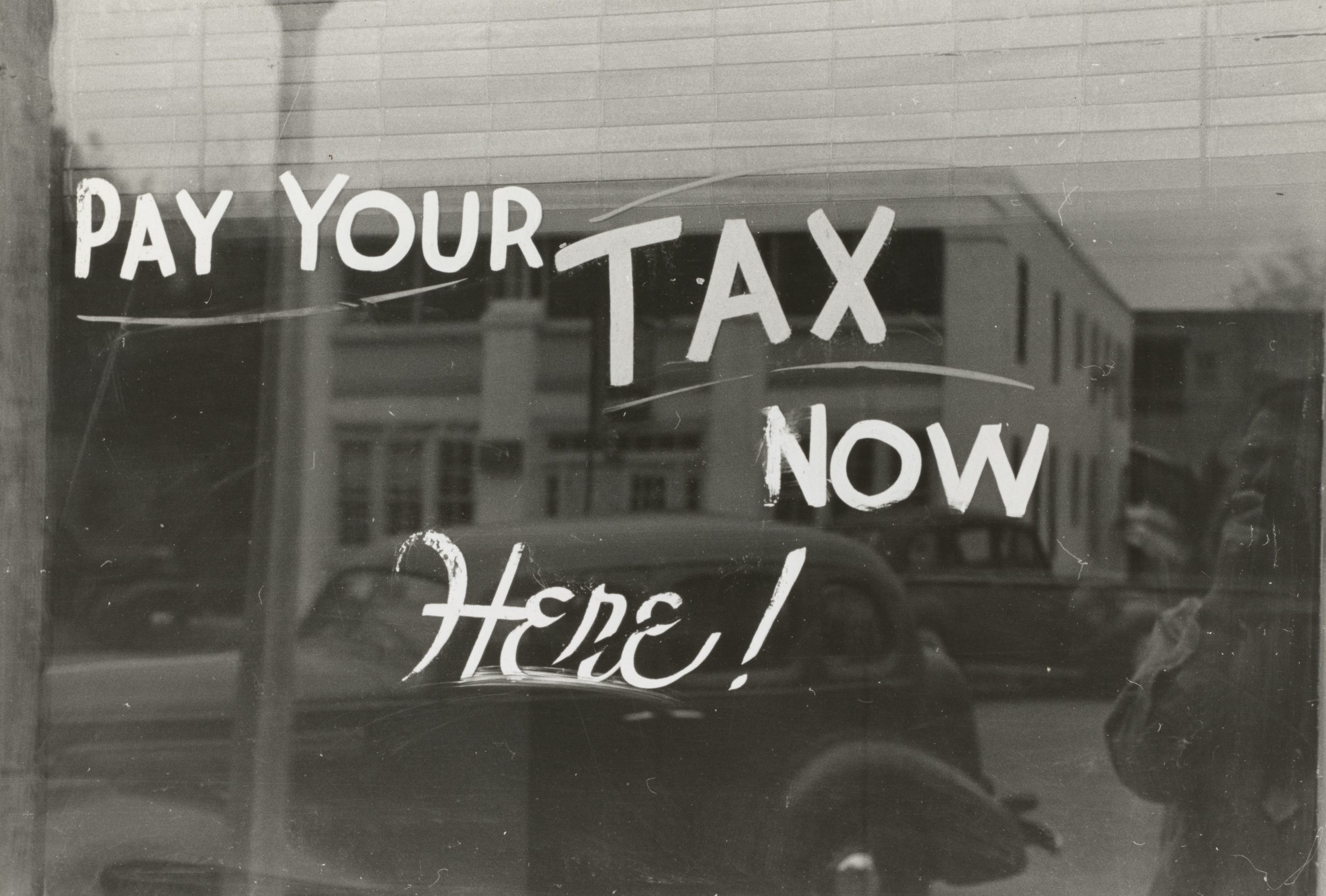
Tax sign for real estate tax article

New Contra Costa real estate transfer tax? New Contra Costa real estate transfer tax? Will there be a new Contra Costa real estate transfer tax? A 3.8% tax on all real estate transfers? No. Well, not in the way you may be thinking. There is a lot of misinformation about the “new” tax on real estate due to Obama’s Health Care plan. Here are some facts about the 3.8% tax going into effect in 2013: This is NOT a real estate transfer tax or a tax upon sale This tax law does NOT eliminate the 250k single person capital gain exclusion (or 500k for married couples) Here is some key information provided through research by the National Association of Realtors: The tax is NOT a transfer tax on real estate sales and similar transactions .

Not long after the tax was enacted, erroneous and misleading documents went viral on the Internet and created a great deal of misunderstanding and made the tax into something far more draconian than the actual provisions. The new tax does NOT eliminate the benefits of the $250,000/$500,000 exclusion on the sale of a principal residence. Thus, ONLY that portion of a gain above those thresholds is included in AGI and could be subject to the tax.

So, if you were wondering if Contra Costa home sales would be subject to a NEW 3.8% real estate transfer tax due to the health care bill passage, the answer is no. You will need to see your accountant though to discover how this tax will impact you and your situation however as this new tax will effect some investment income (including real estate). The 3.8% tax and how it impacts Contra Costa real estate transfer tax: Below is an excerpt from an excellent hand-out explaining the 3.8% tax as it relates to home sales in Walnut Creek, Contra Costa and around the country: Understand that this tax WILL NOT be imposed on all real estate transactions, a common misconception.

Rather, when the legislation becomes eff ective in 2013, it may impose a 3.8% tax on some (but not all) income from interest, dividends, rents (less expenses) and capital gains (less capital losses). Th e tax will fall only on individuals with an adjusted gross income (AGI) above $200,000 and couples fi ling a joint return with more than $250,000 AGI. You can find some great information at this i nformational brochure directed toward realtors so that we can help to educate our clients on what this new investment income tax really is.

Again, it is critical to check in with your CPA or tax specialist to see how this will impact you and your finances but as far as a transfer tax on all real estate? No. Where to find more information about this subject? Check out the FAQ available through the National Association of Realtors. Health Insurance Reform – 3.8% tax on real estate – FAQ P.S. The health care bill, etc. does not effect the Contra Costa real estate transfer tax (es) that have been considered customary in our county.

Contra Costa short sale tax | Walnut Creek tax on short sale | Will Mortgage Debt relief be extended?

Tax sign for real estate tax article

Will the Mortgage Debt Relief Act be extended? Will the Mortgage Debt Relief Act be extended? If you went through a foreclosure or short sale since 2007, you know you received that 1099 form for that tax year telling you how much debt your bank “forgave.” This “cancelled debt” can be taxed as income. That is, before this debt relief act was enacted in 2007.

Last week, DS News reported that an Obama plan proposes to extend this tax waiver legislation. Obama’s FY2013 budget proposal includes an extension of the Mortgage Forgiveness Debt Relief Act of 2007. The Act ensures that homeowners who received principal reductions or other forms of debt forgiveness on their primary residences do not have to pay taxes on the amount forgiven.

We’ve written about short sale taxes in the past, and while you must always talk to a tax professional we offer you information on what to do with that 1099 when you receive it. Check out our article from earlier this year: Taxes on Contra Costa short sales We’ll keep our ears open to see if it sounds like the State of California will follow suit, we hope so.

We don’t think short sales and foreclosures will end by this year, so it seems prudent to extend these protections for homeowners in distress.

Let's Connect

For buyers and sellers across Walnut Creek, Contra Costa County, and Diablo Valley, Catherine Myers provides concierge level real estate services grounded in local experience.

Contact Us